
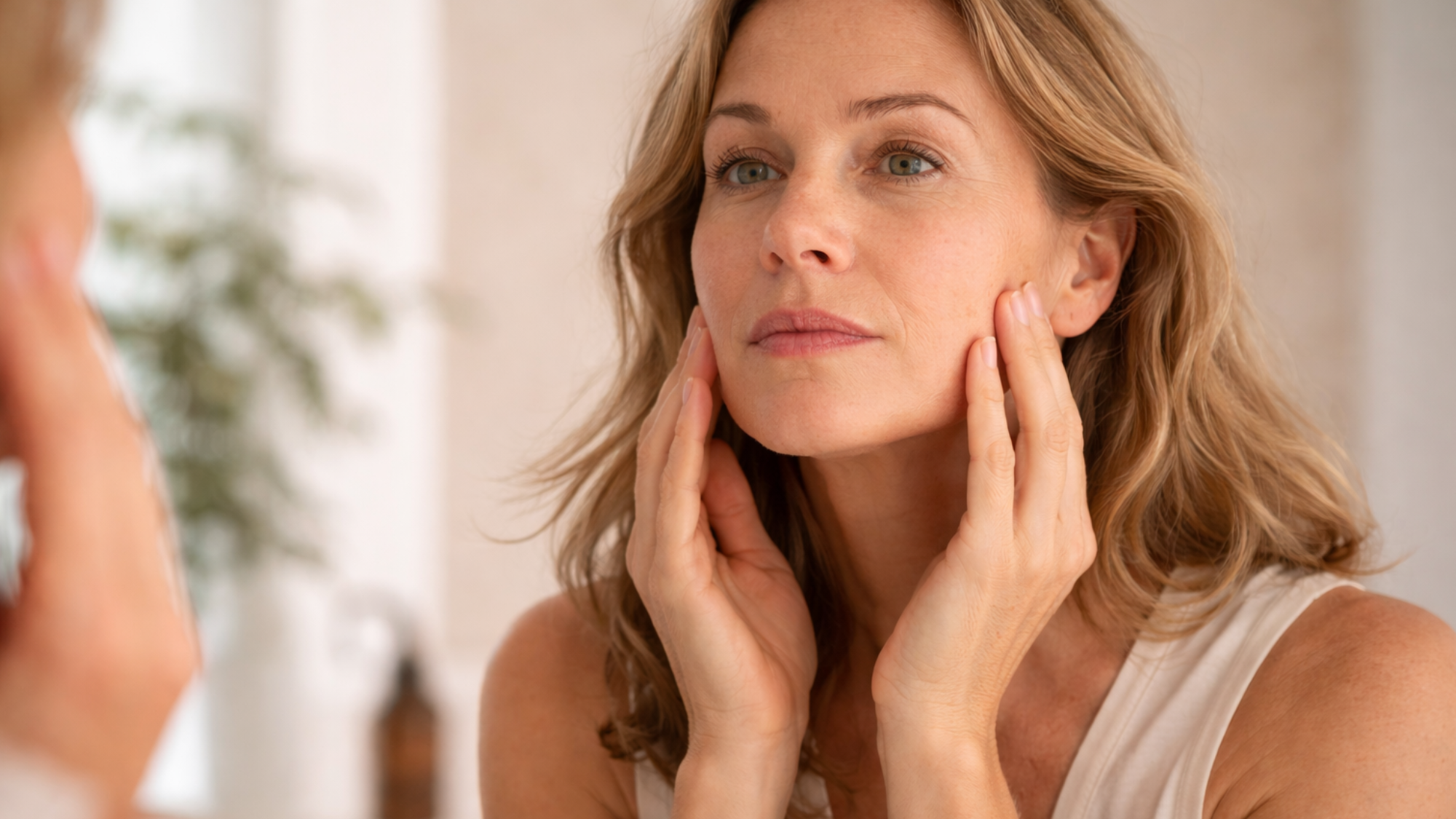
Perimenopause Skin Issues: Causes & Care
Perimenopause is the transitional phase before menopause and it often begins in your late 30s or early 40s.
Many women first notice changes in their skin before they notice changes in their cycle.
Sudden dryness.
Unexpected breakouts.
Increased sensitivity.
Loss of firmness.
If your skincare routine suddenly stopped working, you’re not imagining it. Perimenopause skin problems are driven by hormonal shifts, not just age.
Let’s break down what causes these changes and what your skin truly needs during this stage.

What Causes Perimenopause Skin Problems?
Perimenopause skin changes are biologically driven. The skin is highly sensitive to hormonal fluctuations, particularly estrogen.
As hormone levels shift, several structural and functional changes occur.
1. Declining Estrogen & Collagen Loss
Estrogen supports:
- Collagen production
- Skin thickness
- Elasticity
- Natural oil production
- Hyaluronic acid levels
During perimenopause, estrogen fluctuates and gradually declines.
As a result:
- Collagen production slows
- Skin becomes thinner
- Fine lines deepen
- Firmness decreases
Research shows women can lose up to 30% of collagen in the early years of menopause. This is why loss of firmness is one of the most common perimenopause skin concerns.
2. Increased Dryness & Dehydrated Skin
As estrogen declines, skin produces less oil and retains less moisture.
Common symptoms of perimenopause dry skin include:
- Tightness after cleansing
- Rough patches
- Dull tone
- Makeup settling into lines
This isn’t just surface dryness, it’s barrier weakening.
When the skin barrier is compromised, water evaporates more easily, increasing transepidermal water loss (TEWL).
3. Hormonal Acne in Your 40s
Perimenopause acne often appears along the chin and jawline.
Why?
As estrogen declines, androgens become relatively more dominant, stimulating oil production.
This can lead to:
-
Clogged pores
-
Deep, inflammatory breakouts
-
Increased oiliness in the lower face
Unlike teenage acne, perimenopause acne occurs alongside dryness and sensitivity, making it more complex to treat. Over-drying products can worsen inflammation.
4. Hyperpigmentation & Uneven Skin Tone
Hormonal fluctuations can also affect melanin production.
Combined with slower cellular turnover, this may lead to:
-
Dark spots
-
Uneven skin tone
-
Melasma flare-ups
Pigmentation often becomes more noticeable because skin renewal slows as hormones shift.
5. Increased Sensitivity & Redness
Hormonal shifts weaken the skin barrier and reduce lipid production.
This leads to:
- Increased sensitivity
- Redness
- Itchiness
- Product intolerance
Additionally, stress hormones like cortisol rise during midlife transitions.
Cortisol increases inflammation and can accelerate collagen breakdown.
This is why emotional stress often shows up on the skin.
The Skin–Stress Connection During Perimenopause
Hormonal changes during perimenopause don’t only affect estrogen levels — they can also influence the body’s stress response.
Many women experience increased stress, sleep disruption, and emotional fluctuations during this stage of life. These changes may elevate cortisol, the body’s primary stress hormone.
When cortisol remains elevated, it can contribute to several skin concerns including:
-
Increased inflammation
-
Slower skin repair
-
Collagen breakdown
-
Sensitivity and redness
-
Hormonal breakouts
Because the skin and nervous system are closely connected, managing stress can play an important role in supporting skin health during perimenopause.

Breathwork: Supporting Skin from the Inside Out
One simple way to help regulate the body’s stress response is through breathwork.
Breathwork helps activate the body’s parasympathetic nervous system, often called the “rest and repair” state. When the body shifts into this calmer state, circulation improves, cortisol levels decrease, and the body can better support natural repair processes — including those affecting the skin.
A simple breathing technique to try during your evening skincare routine is 4–6 breathing:
-
Inhale slowly through your nose for 4 seconds
-
Exhale gently through your mouth for 6 seconds
-
Repeat for 3–5 minutes
Many women find that pairing breathwork with their nightly skincare routine turns it into a calming ritual that supports both skin health and emotional well-being.
At LING, we believe skincare works best when it supports the whole person, not just the surface of the skin.
As part of the LING Vitality Collection, we offer complimentary guided breathwork inspired by SOMA Breath techniques to help support relaxation, nervous system balance, and overall vitality during this stage of life.
By combining supportive skincare with restorative practices, we encourage a more holistic ritual that nurtures both skin resilience and inner balance.
A Legacy of Care: Ling Chan’s Approach to Perimenopause Skin

For over four decades, LING founder Ling Chan helped women navigate changing skin through every stage of life.
Through her work with thousands of clients, she developed a deep understanding of how hormonal transitions affect the skin and recognized that many traditional skincare routines were either too aggressive or not supportive enough during this stage.
Her philosophy remains simple:
- Protect the skin barrier
- Replenish hydration
- Calm sensitivity
- Support resilience and elasticity
These principles continue to guide LING's approach to perimenopausal and menopausal skin today.

Discover Your Personalized Perimenopause Skin Plan
No two women experience perimenopause in exactly the same way.
Some struggle with dryness and sensitivity. Others notice breakouts, pigmentation, loss of firmness, or multiple concerns at once.
That's why personalized skincare matters.
Our Perimenopause Skin Quiz helps identify the concerns most relevant to your skin and provides customized skincare recommendations designed to support your needs during this transition.
When you complete the quiz, you'll receive:
✔ Personalized skincare recommendations
✔ Guidance tailored to your skin concerns
✔ Complimentary access to guided breathwork resources
✔ Support through our C.P.R. Skin + Breath Reset System™
Rather than guessing which products are right for your skin, you'll receive recommendations based on your unique results.
Supporting Your Skin Through Transition
Perimenopause skin changes are not simply signs of aging—they reflect a natural biological transition.
Understanding what's happening beneath the surface can help you make more informed decisions about caring for your skin.
With the right support, including personalized skincare, healthy daily rituals, and stress-management practices, your skin can remain resilient, healthy-looking, and radiant through every stage of life.
Take our Perimenopause Skin Quiz to receive personalized skincare recommendations and complimentary guided breathwork resources tailored to your unique skin concerns.
Sources
Research on menopause and skin health shows that hormonal changes significantly affect collagen production, hydration, and skin barrier function.
-
Brincat, M. et al. Skin collagen changes in postmenopausal women. Obstetrics & Gynecology, 1987.
-
Thornton, M.J. Estrogens and aging skin. Dermato-Endocrinology, 2013.
-
Verdier-Sévrain, S. Effect of estrogens on skin aging. Climacteric, 2006.
-
American Academy of Dermatology (AAD) — Menopause and skin health.
-
Harvard Health Publishing — How menopause affects your skin.
Disclaimer:
This article is intended for educational purposes only and does not replace professional medical advice. Individual skin concerns during perimenopause or menopause should be discussed with a qualified healthcare provider or dermatologist.



Leave a comment
This site is protected by hCaptcha and the hCaptcha Privacy Policy and Terms of Service apply.